



Bag, Stuff, Place: The Right Way to Pack Shoes in a Suitcase
Bag each pair to protect your clothes, stuff the insides with socks or underwear, and place the shoes at the base or along the perimeter of your suitcase. Cap how many pairs you bring by trip length, and for a carry-on, a practical limit is a few pairs, with the bulkiest one worn on the plane. That’s the entire method for shoe packing in a suitcase. It solves the two real problems travelers run into: shoes eating clothes-worthy space and shoes soiling everything they touch.
Here’s what to do before you even open your suitcase:
- Wear your bulkiest shoe pair through security instead of packing it.
- Grab shower caps, produce bags, or a dedicated shoe bag for each remaining pair.
- Stuff socks or rolled underwear into every shoe before it goes anywhere near your suitcase.
Key Takeaways
Packing shoes well comes down to isolating soles, stuffing hollow space, and capping pairs by trip length rather than by wishful thinking.
| Point | Details |
|---|---|
| Bag every pair | Isolate soles from clothing using a shower cap, produce bag, or shoe bag. |
| Stuff to preserve shape | Fill each shoe with socks or rolled underwear to hold its form and save space. |
| Follow the pair cap | Bring 1 pair for a weekend, 2 for a week, 3 to 4 max for longer trips. |
| Wear the bulkiest pair | Free up carry-on volume by wearing, not packing, your heaviest shoes. |
| Compress the rest of your bag | Stoiq’s vacuum compression bags free up space for shoes without adding checked-bag fees. |
Table of Contents
- What Are the Key Considerations for Shoe Packing in a Suitcase?
- How Many Pairs of Shoes Should You Pack by Trip Length?
- Which Shoe Packing Method Actually Works Best?
- How Do You Keep Shoes From Smelling Up Your Suitcase?
- How Should You Pack Heels, Boots, and Bulky Sneakers?
- What’s the Carry-On Shoe Rule and Pre-Flight Checklist?
- Still Short on Space? Here’s What Actually Fixes That
- Sources
What Are the Key Considerations for Shoe Packing in a Suitcase?
Shoes are mostly hollow, and that hollow space is wasted volume unless you fill it. Stuffing socks, underwear, or a rolled T-shirt into each shoe reclaims that “dead air” and does double duty: it keeps loafers and sneakers from collapsing on their sides while occupying space you’d otherwise fill with a packing cube anyway, according to Koio’s travel packing guide.
Weight matters just as much as volume. Shoes are dense, so putting them low in the suitcase, near the wheels or hinge, keeps the bag from tipping over when you set it down or wheel it through an airport, a placement principle TravelPro recommends for stabilizing weight distribution.
Hygiene is non-negotiable. Soles have touched sidewalks, bathroom floors, and who knows what else, so isolating them from your clothes with a bag or barrier is not optional packing etiquette. It’s damage control.
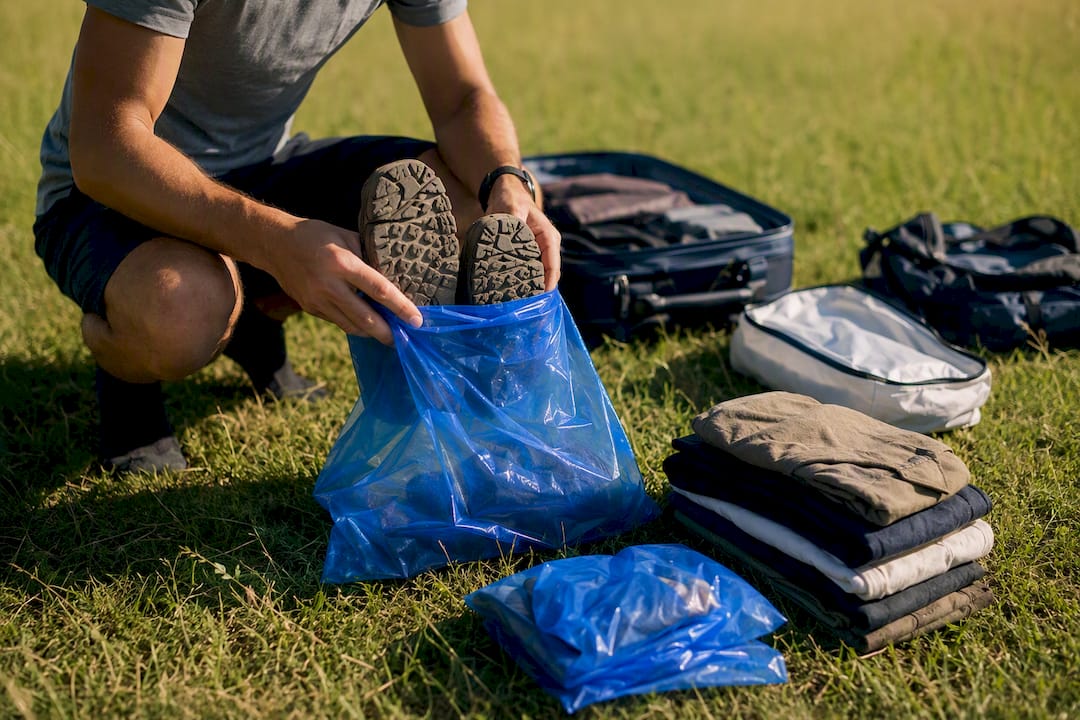
For shape protection, stuffing works for most shoes, but leather dress shoes benefit from actual shoe trees or firmly rolled paper rather than compressible fabric, which can flatten under pressure.
Pro Tip: Never cram leather shoes under heavy items to save an inch of space. A dent that sets in during an eight-hour flight can take weeks to relax back out.
How Many Pairs of Shoes Should You Pack by Trip Length?
Most overpacked suitcases have one thing in common: too many shoes for too short a trip. Setting a hard pair cap based on trip length keeps that from happening before you’ve even started folding clothes.
| Trip Length | Pairs to Pack | Why |
|---|---|---|
| Weekend | 1 (worn) | One versatile pair covers a two or three day trip without eating suitcase space. |
| Up to 1 week | 2 | Covers a dress pair and a walking pair without redundancy. |
| 1 to 3 weeks | a few pairs | Adds a third pair for climate shifts or activity changes without excess. |
| 3 or more weeks | 3 to 4 (cap) | Beyond four pairs, plan to wash or buy rather than pack more. |
These caps come from Pack Lightly’s shoe packing framework, and the carry-on override matters even more: if you’re flying with just a carry-on, cap it at two pairs and wear the bulkiest one during travel. That single habit, experts note, frees up meaningful volume without touching your clothing allotment at all.
Which Shoe Packing Method Actually Works Best?
Three methods cover almost every suitcase and every trip. Pick based on your luggage style, not habit.
1. Perimeter (soles-to-sides). Stand each bagged pair upright against the suitcase walls, soles facing outward. This uses the rigid frame of the bag as a natural brace, which is why it works best in structured hard-shell suitcases. Lining the walls this way, rather than piling shoes in the middle, reduces shifting during transit and keeps softer items safe in the center.
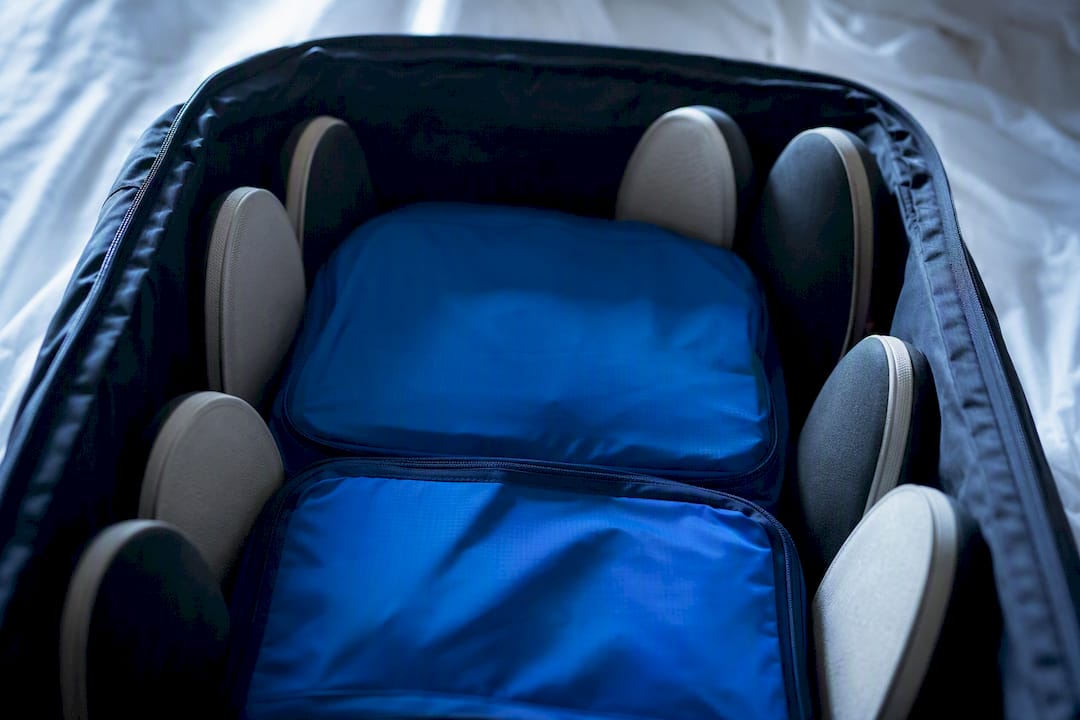
2. Heel-to-toe base. Lay bagged shoes flat at the bottom of the suitcase, alternating heel and toe so each pair interlocks with the next. This is the go-to for roller bags, since it creates a flat, stable foundation near the wheels instead of a lumpy one under your clothes. Keep this layer to the outer edges so it doesn’t crowd the middle, where you’ll want room for folded items.
3. Zippered shoe compartment or shoe cube. Many suitcases and packing systems include a built-in zippered pocket, and dedicated shoe cubes work the same way. These isolate one pair cleanly, but most only fit one pair, so combine the compartment with perimeter or base placement for anything beyond a weekend trip, a limit Pack Lightly points out for anyone packing three or more pairs.
Whichever method you choose, run the same checklist:
- Clean the soles before bagging.
- Stuff the insides to hold shape.
- Bag each pair individually.
- Orient soles away from clothing.
- Fill any remaining gaps with socks or rolled soft items.
How Do You Keep Shoes From Smelling Up Your Suitcase?
The cheapest hygiene fix in travel is a disposable shower cap stretched over a nested pair of shoes. It seals the soles away from everything else in your bag and costs nothing if you’re already grabbing one from a hotel room, a trick that performs as well as many purpose-built shoe bags for routine trips.
If you want something reusable, a zippered shoe laundry bag holds up better over repeated trips than a disposable bag, though it takes up slightly more room than a plastic one.
- Toss a charcoal sachet or dry tea bag inside each shoe for longer trips.
- Always let shoes air out and dry fully before bagging them.
- Never pack a damp shoe. Moisture trapped in a sealed bag turns into mildew fast, a risk Pack Better flags for any footwear packed while still wet.
Pro Tip: Skip stuffing shoes with anything liquid, breakable, or leaky. Save the fragile souvenirs for your carry-on tote instead.
How Should You Pack Heels, Boots, and Bulky Sneakers?
Not every shoe follows the same rule, and treating heels like sneakers is how heels end up crushed.
- Heels: Pack them near the top of the suitcase in a protective bag, and never stack heavy items on top. Delicate footwear should skip the bottom-of-bag rule entirely, since pressure from above is what bends thin heels out of shape.
- Boots: Anchor them in the bottom corners with the heel facing outward. Loosen the laces and stuff the shaft with socks or a rolled scarf to prevent hard creases from forming across the leather.
- Bulky sneakers: Wear the biggest pair on the plane, or place the rest at the base or perimeter. Stuff the toe box firmly so the upper doesn’t collapse under the weight of packed clothes.
What’s the Carry-On Shoe Rule and Pre-Flight Checklist?
Carry-on space is the tightest constraint you’ll face, so the two-pair cap matters more here than anywhere else. Wearing your bulkiest pair, rather than packing it, is the single biggest space-saver available to carry-on-only travelers, a habit Pack Lightly consistently recommends for anyone skipping checked luggage.
Run this checklist right before you zip up and head out:
- Clean the soles of every pair going in the bag.
- Stuff each shoe with socks or underwear.
- Bag each pair individually, no exceptions.
- Place shoes at the base or perimeter, never loose in the middle.
- Weigh the bag and test the zipper closes without strain.
If you’re figuring out how to fit two weeks of clothing into a single carry-on alongside your shoes, this carry-on packing breakdown walks through the same volume tradeoffs in more detail.
Pro Tip: When choosing which shoes to bring, favor pairs that work across at least two outfits or activities. One versatile sneaker beats two single-purpose shoes every time.
A Packer’s Honest Take on the Shoe Rules That Actually Stick
Most people over-pack shoes because they’re planning for outfits that never happen, not for the trip they’re actually taking. The pair-cap table above works precisely because it removes that guesswork. Stick to it and you stop negotiating with yourself in the closet the night before a flight.
The other thing worth saying plainly: the shower-cap hack and the perimeter method aren’t clever life hacks, they’re just correct packing physics. Shoes are the densest, dirtiest item in your bag, so they belong at the edges, isolated, and stuffed to hold shape. Skip any one of those steps and you’re gambling on either crushed shoes or a soiled sweater.
Still Short on Space? Here’s What Actually Fixes That
Bagging and capping your shoe pairs solves the hygiene problem, but it doesn’t solve the volume problem if your suitcase is still packed to the seams. That’s where a vacuum compression bag with a built-in pump earns its place, letting you fit 2 to 3 times more into a carry-on than folding alone allows.
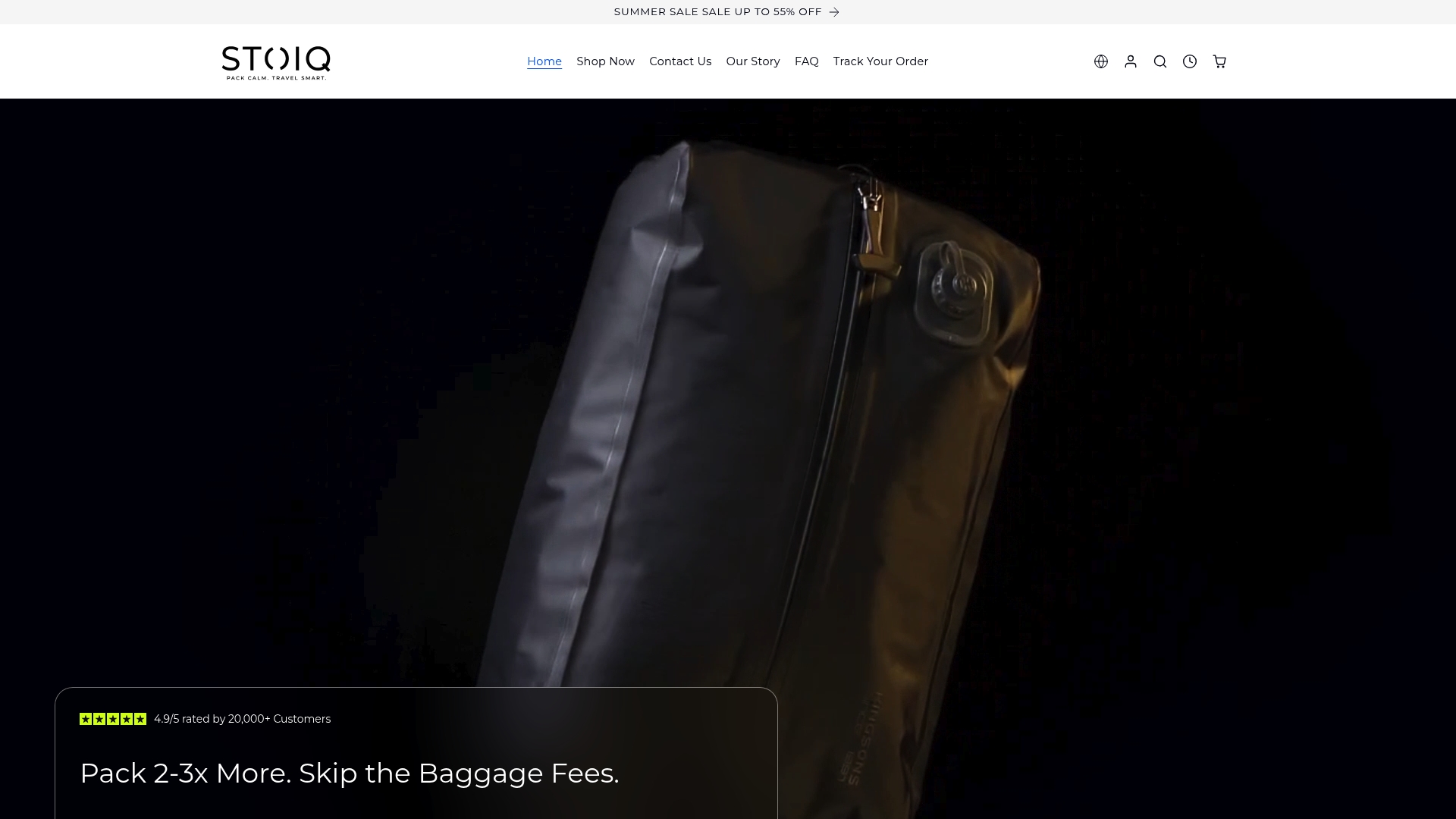
Unlike a standard packing cube, which organizes items but doesn’t shrink them, Stoiq’s compression bags use an integrated USB-C rechargeable pump to pull the air out of clothing layers, freeing up real space for your bagged shoe pairs without needing a separate vacuum device. It’s a meaningful difference from cubes that just corral clothing rather than reduce it. Over 20,000 travelers have used the system to avoid checked-bag fees while still bringing the shoe pairs their trip actually calls for, based on feedback collected on Stoiq’s reviews page. If your carry-on is fighting you before you’ve even added shoes, check out the Stoiq 20L vacuum compression bag and see how much room opens up.
Sources
- How To Pack Shoes In A Suitcase — Pack Lightly
- How to Pack Shoes in a Suitcase to Save Space — Pack Better
- How to pack shoes for travel — Koio editorial
- The secret trick to packing shoes without wasting space — Parade
