



How Long Does a Travel Pump Battery Last on a Trip?
A fully charged built-in vacuum pump typically delivers 20 to 35 compression cycles before it needs a recharge, depending on bag size and how much you’re stuffing into it. That’s roughly enough for a full carry-on packing session plus a couple of touch-ups mid-trip. The single most reliable way to keep it running: carry a USB-C power bank rated at 10,000 mAh or higher.
Before you leave the house, do two things:
- Pack the USB-C charging cable that came with your bag (not just any cable).
- Charge your power bank to 100% the night before departure.
Quick fact: Most integrated travel pumps draw enough power that a single full charge covers a week’s worth of packing and repacking for the average traveler, not just one use.
Key Takeaways
Reliable pump battery life on the road comes down to matching your power bank to your trip length and keeping the battery out of heat.
| Point | Details |
|---|---|
| Typical runtime per charge | Expect 20 to 35 compression cycles, enough for a full carry-on packing session. |
| Match power bank to trip | Use a 10,000 mAh bank for weekend trips, 20,000 to 25,000 mAh for week-long travel. |
| Heat is the main enemy | Keep packed bags and power banks out of hot cars and direct sun to protect battery life. |
| Watch for aging signs | Longer charge times, fewer cycles, or swelling mean it’s time to recycle the battery. |
| Stoiq’s built-in pump | USB-C compatible design lets travelers recharge from standard power banks or wall adapters, no proprietary charger needed. |
Table of Contents
- What Manufacturers Mean by Pump Battery Life
- What Shortens or Lengthens Pump Runtime on Trips
- How Should You Plan Charging for a Trip?
- How Do You Know Your Pump Battery Is Failing?
- Packing Your Pump and Power Bank Through Airport Security
- Why Charging Habits Matter More Than the Spec Sheet
- A Vacuum Bag That Solves the Charger Problem Before It Starts
- Sources
What Manufacturers Mean by Pump Battery Life
Battery specs on a travel pump usually come down to two numbers: the battery’s capacity in milliamp hours (mAh) and the pump motor’s watt draw during operation. A pump with a 2,000 mAh internal battery pulling around 5 to 8 watts during active suction will generally run for several minutes of continuous use per charge, which translates into dozens of individual compression cycles rather than one long session.
Here’s how that plays out in real packing scenarios:
- One carry-on bag, moderate load: roughly 8 to 12 minutes of total pump time, or about 10 to 15 compression cycles.
- Two medium bags packed separately: expect to use up 40 to 50% of a full charge.
- A full luggage set (carry-on plus two packing cubes): you’ll likely need a partial recharge before finishing.
Lab-rated cycle counts almost always outperform what you’ll experience at the airport hotel or your in-laws’ guest room. Manufacturers test in controlled temperatures with fresh batteries and ideal seals. Real trips involve variables labs don’t account for: a bag that’s been sat on, a seal that’s slightly askew, or a room that’s warmer than a climate-controlled test bench.
Statistic to remember: a well-designed integrated pump with USB-C compatibility can be recharged from a standard power bank, a laptop port, or a wall adapter, which means you’re never locked into a proprietary charger you might forget at home.
What Shortens or Lengthens Pump Runtime on Trips
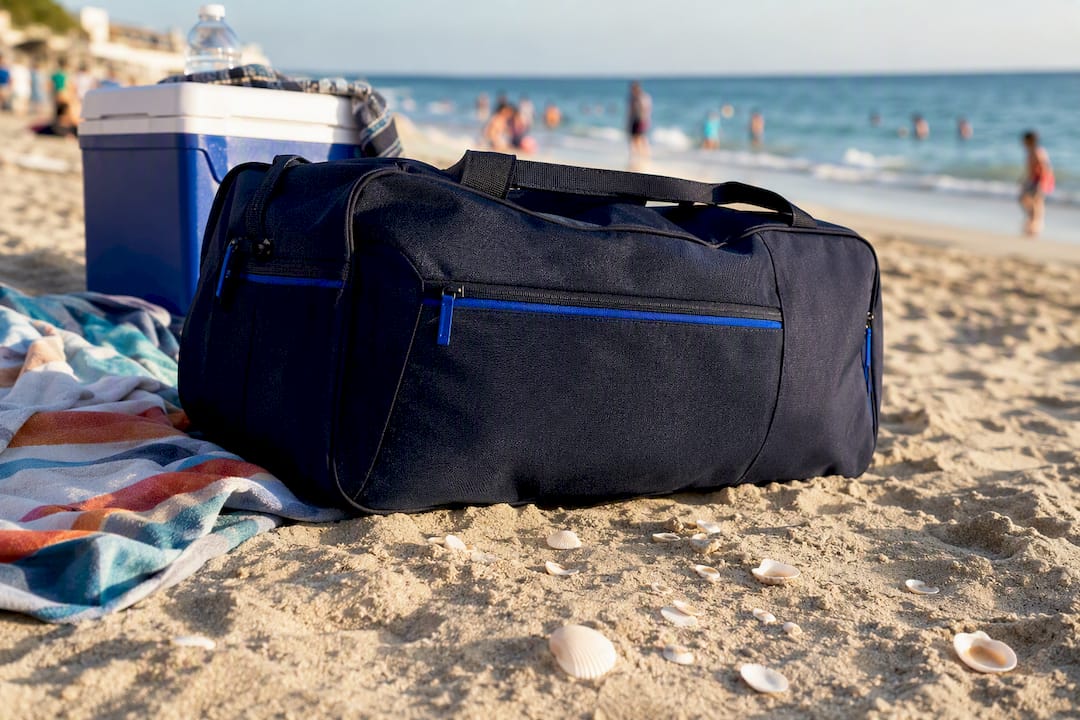
Temperature is the biggest variable most travelers overlook. Heat speeds up battery degradation and can shorten how long a single charge lasts, while cold temporarily reduces how much capacity is available right when you need it. Leaving your packed bag in a hot car trunk or a sun-baked hotel room does more damage over time than almost any other travel habit.
Load matters just as much. Thicker garments like winter coats or bulky towels force the pump to run longer per compression cycle than lightweight summer clothes, which drains more battery per bag.
Your charging gear matters too:
- A low-output power bank (under 5 watts) will charge your pump slowly and inefficiently.
- A damaged or off-brand USB-C cable can bottleneck charging speed even with a good power source.
- Mismatched cables sometimes trigger safety throttling, which slows things down further.
Watch for these signs your battery is aging: charge times that keep creeping longer, fewer cycles per charge than you remember getting a year ago, or any visible swelling in the battery housing.
Pro Tip: Keep your packed bag out of direct sunlight and out of hot car trunks between compressions. Heat is the single fastest way to age a lithium battery, even when the pump isn’t running.
How Should You Plan Charging for a Trip?
Match your power bank to your trip length, not just your bag count.
- Weekend trips (2 to 3 days): a 10,000 mAh power bank gives you one full pump recharge with capacity left for your phone.
- Week-long trips: step up to 20,000 to 25,000 mAh, which typically supports multiple full pump recharges plus your other devices, a range commonly recommended for multi-day trips.
- Extended or multi-country trips: consider two smaller banks instead of one large one, so a single failure doesn’t strand you.
Pair your pump’s USB-C input with a power bank that supports USB-C PD (Power Delivery) output. Mismatched wattage between the two doesn’t just charge slower, it generates more heat, which works against battery longevity over time.
A few habits worth building into your routine:
- Keep the pump topped off during idle moments (waiting for a flight, riding in a cab) rather than waiting for a full drain.
- Avoid running the battery to zero repeatedly.
- Run one full drain and recharge cycle every couple of months to keep the battery’s internal charge readings accurate, a practice known as calibration.
On air travel: power banks belong in your carry-on, never in checked luggage, and airlines generally cap what you can bring based on watt-hour (Wh) ratings, so check your carrier’s limit before you fly.
How Do You Know Your Pump Battery Is Failing?
A battery that’s degrading gives clear warning signs before it fails completely. Charge times stretching noticeably longer, cycle counts dropping well below what you used to get, or any swelling in the housing are all signals to stop charging and stop using it immediately, since reduced performance is a primary indicator a lithium-ion battery is nearing end-of-life.
If your pump dies mid-trip, don’t panic:
- Use the bag’s manual release valve to finish compressing by hand, a feature built into most quality vacuum bags for exactly this situation.
- Roll the bag tightly after manual release to squeeze out remaining air before sealing.
Pro Tip: Never charge a battery that feels warm to the touch or shows swelling. Let it cool completely, and if the swelling doesn’t go away, recycle it at a certified battery drop-off rather than continuing to use it.
Stick to partial charges when possible, avoid heat exposure, and recycle any battery showing these symptoms through a certified e-waste program rather than the trash.
Packing Your Pump and Power Bank Through Airport Security
Power banks must travel in your carry-on, not your checked bag. This isn’t a minor airline preference; it reflects real fire-risk concerns tied to lithium batteries in unpressurized, unmonitored cargo holds.
A few packing habits prevent headaches at the gate:
- Confirm your specific airline’s Wh limit before you pack, since limits vary by carrier.
- Protect exposed battery terminals with a case or tape to prevent shorts from loose change or keys.
- Avoid charging your power bank or pump in a closed bag at a gate outlet; letting it charge in the open reduces heat buildup.
For a deeper look at what security allows through checkpoints, see this guide on whether vacuum compression bags are TSA-approved.
Why Charging Habits Matter More Than the Spec Sheet
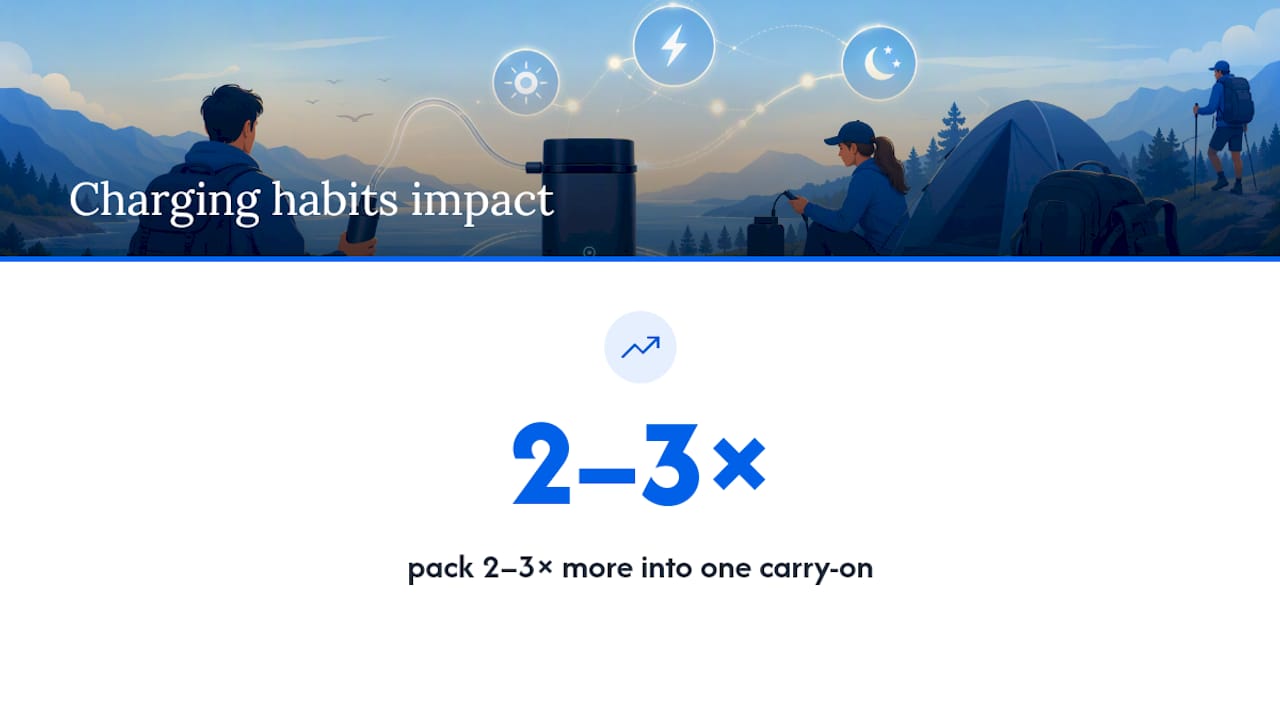
Most travelers assume battery life is fixed the day they buy a bag, but the truth is closer to how you treat a phone: habits determine most of what you actually experience. A bag with a strong spec sheet still underperforms if it sits in a hot trunk or gets paired with a bargain cable.
Stoiq built its integrated pump design around removing that guesswork, and the feedback from over 20,000 travelers backs up the packing efficiency claims. Readers who apply the charging routines above, partial top-offs, proper power banks, heat avoidance, get the full benefit of packing 2 to 3 times more into a single carry-on trip after trip.
— Hugh
A Vacuum Bag That Solves the Charger Problem Before It Starts
Stoiq’s built-in USB-C pump means you’re never hunting for a separate vacuum device or a proprietary charger at 6 a.m. before a flight. The pump recharges from the same power bank or wall adapter you’re already packing for your phone, which cuts one more gadget out of your travel kit entirely.
The Stoiq Carry-On Solution 20L is built for exactly the travel routines covered above: partial charges, USB-C compatibility, and enough per-charge cycles to handle a full carry-on packing session without a mid-trip scramble. If you’re outfitting cold-weather trips, pairing your bag with compact layers like a thermal base layer set helps you compress more into less space. Check the 20L product page for current specs and sizing, and see what other travelers say on the Stoiq reviews page before your next trip.
Sources
- How to safely maintain, use, and dispose of your power banks | The Verge
- How to Maximize Power Bank Battery Life: The 2026 Maintenance Guide
- Extend Your Travel Gadgets’ Battery Life: A Comprehensive Guide - EscapeToTranquillity
