



Personal Item Backpack Size: What Fits Under the Seat
Yes, a backpack counts as a personal item as long as it fits your airline’s under-seat limit. Target a soft-sided backpack no larger than 17 x 12 x 8 inches, and you’ll clear nearly every US carrier’s rules without a second thought.
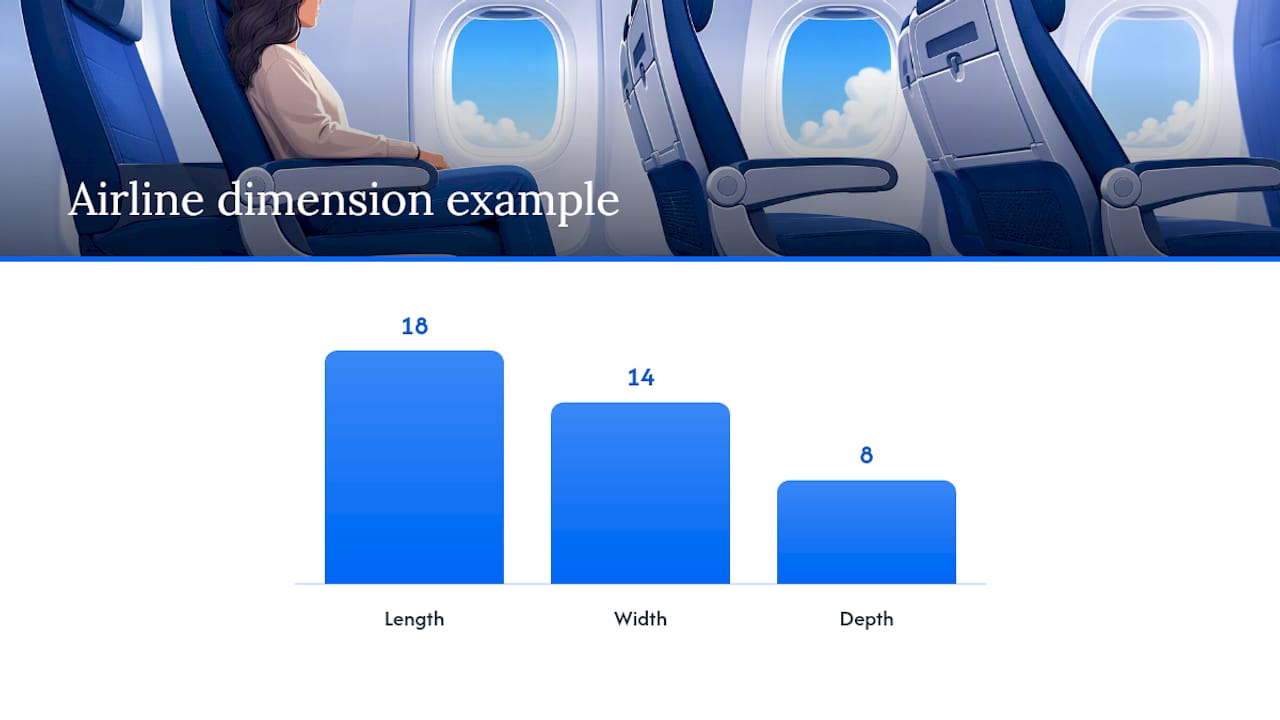
The TSA checks what’s inside your bag for security purposes. It does not set size limits for personal items or carry-ons. Airlines control that entirely, and each one sets its own numbers. The most common personal-item maximum among major US carriers runs around 18 x 14 x 8 inches, but that figure hides a lot of variation. United, Alaska, and several budget carriers enforce tighter dimensions on at least one side of the bag.
That’s why a single “safe” number matters more than memorizing every airline’s chart.
- Practical safe size: 17 x 12 x 8 inches fits comfortably under nearly every domestic seat.
- Absolute conservative size: 16 x 11 x 6 inches clears even the strictest budget-carrier limits.
- Standard reference max: 18 x 14 x 8 inches, the figure most US airlines publish.
Enforcement is inconsistent even within the same airline. A gate agent in Denver might wave through a bag that gets flagged in Fort Lauderdale. Always check the operating carrier’s current policy before you fly, especially on codeshare or connecting itineraries where the airline that sold your ticket isn’t the one boarding you.
Key Takeaways
A backpack qualifies as a personal item only when its packed external dimensions fit the operating airline’s under-seat limit, and 17 x 12 x 8 inches clears nearly all of them.
| Point | Details |
|---|---|
| Target a safe universal size | Aim for 17 x 12 x 8 inches to clear most airlines without checking every chart. |
| Know the width and depth traps | United enforces a narrow 10-inch width; Alaska enforces a shallow 6-inch depth. |
| Measure the packed bag | Include handles, straps, and any external items when measuring, not the empty bag. |
| Liters don’t equal airline compliance | Stick to 20 to 25L exterior profiles; 35L packs usually exceed personal-item limits. |
| Compression helps only if it shrinks the exterior | Stoiq’s compression backpack and 20L vacuum bag reduce external volume, but packed measurements still decide gate acceptance. |
Table of Contents
- What Counts as a Personal Item Backpack Size, Exactly?
- Airline-by-Airline Personal Item Size Limits
- How to Measure Your Backpack the Way Airlines Do
- Does Liter Capacity Actually Matter for Personal Item Size?
- Packing and Compression Tactics That Actually Fit Your Bag Under the Seat
- What to Look for When Buying a Personal Item Backpack
- Your Pre-Flight Personal Item Checklist
- How Compression Backpacks Actually Work, and Where They Don’t
- A Compact Way to Solve the Under-Seat Squeeze
- Sources
What Counts as a Personal Item Backpack Size, Exactly?
A personal item is the smaller of the two bags airlines let you bring into the cabin for free, and it has one non-negotiable rule: it has to fit under the seat in front of you. A carry-on, by contrast, goes in the overhead bin and is almost always allowed to be larger. Confusing the two is the single most common reason travelers get stopped at the gate.
The distinction isn’t just about size. It’s about where the bag lives during the flight.
Enforcement splits along the same line as the definitions. TSA agents at security are checking for prohibited items, liquids over 3.4 ounces, and anything that sets off the scanner. They couldn’t care less whether your backpack is 17 inches or 19 inches tall. That job belongs entirely to the airline, and it usually happens at two points: check-in, where a bag might get flagged as oversized, or boarding, where gate agents eyeball bags and pull anyone who looks borderline.
Some airlines, like American, publish exact dimensions on their baggage page. Others rely on a vaguer “must fit under the seat in front of you” standard and leave the judgment call to staff. That ambiguity is exactly why a compact, soft-sided bag beats a rigid one, even when both claim to meet the same size on paper.
Airline-by-Airline Personal Item Size Limits
Here’s where things get specific. Airlines don’t just differ in their maximum numbers. They differ in which dimension they enforce hardest, and that’s the detail most packing guides skip.
Budget carriers enforce most aggressively, and it isn’t close. Because their base fares often don’t include a full-size carry-on, personal-item compliance is the one place they actually check dimensions with a sizer box at the gate, and gate fees for a reclassified bag typically run $35 to $100. At Spirit or Frontier, that’s not a rare edge case; it’s a routine revenue line.
Two airlines deserve a closer look because their limits create traps that a bag meeting the “common” 18 x 14 x 8 standard will still fail.
United’s width problem. United’s published personal-item guidance caps width at just 10 inches, five inches narrower than American’s or Delta’s allowance. A backpack that’s perfectly fine at Delta can get flagged at a United gate because it’s too wide, even if the height and depth are within range. Travel + Leisure’s review of underseat storage variation confirms United sits at the narrow end of the spectrum industry-wide.
Alaska’s depth problem. Alaska allows more width (13 inches) but caps depth at just 6 inches, tighter than almost every other major carrier. A backpack with a bulky, boxy profile that’s fine everywhere else will look overstuffed and get pulled at an Alaska gate.
If you fly across multiple airlines regularly, don’t build your packing habits around the “average” 18 x 14 x 8 figure. Build them around the tightest constraint on each axis: 16 inches on width, 6 inches on depth, and 8 inches on the vertical measurement. A backpack built to those numbers passes every airline on this list without you having to think about which carrier you’re flying that week.
Pro Tip: Before booking a multi-leg itinerary, check the operating carrier’s baggage page for each segment individually. A ticket sold by one airline but operated by a partner airline gets enforced under the operating carrier’s rules, not the one on your boarding confirmation.
Wirecutter’s review of underseat luggage options landed on the same conclusion after comparing policies across airlines: soft-sided, compressible bags give you the most margin for error because they can flex into whatever shape the gate sizer or under-seat gap demands.
How to Measure Your Backpack the Way Airlines Do
Most rejected bags aren’t oversized by a lot. They’re oversized because the traveler measured the empty bag, not the packed one. Here’s the process that actually matches how gate staff check your bag.
- Pack the bag the way you’ll actually travel with it, including anything clipped or strapped to the outside.
- Measure height first, from the bottom seam to the very top, including any external pockets or bulge caused by packing.
- Measure width next, at the widest point, which is usually the middle of the bag once it’s full.
- Measure depth last, front to back, including handles, wheels, or any external strap hardware if the bag has them.
- Compare your three numbers against the airline’s published order, since not every airline lists length, width, and depth in the same sequence.
That last step trips people up more than any other. American lists 18 x 14 x 8 as length by width by depth. Another airline might publish the same three numbers in a different order, and assuming they match without checking the labels is how a bag that “should” fit gets flagged anyway.
Pro Tip: Measure your bag with a water bottle in the side pocket and your travel pillow strapped to the top, if that’s how you actually fly. Airport sizer boxes don’t care what your bag measures empty. They care what it measures the moment you try to slide it under the seat.
If your home tape-measure numbers put you within an inch of the limit, don’t gamble. Aircraft under-seat space varies by seat row and jet type, and a bag that clears one flight’s bulkhead-free economy row can get stuck under a narrower seat on a regional jet the next leg.
Does Liter Capacity Actually Matter for Personal Item Size?
Not the way most travelers assume. Airlines measure external dimensions in inches or centimeters. None of the major US carriers publish a liter cap for personal items, so a bag’s liter rating tells you almost nothing about whether it will fit under a seat.
That gap causes real confusion, because liters are how most backpack brands market their bags.
- A 20L pack typically measures around 17 x 11 x 7 inches, comfortably within most personal-item limits.
- A 25L pack often runs closer to 18 x 12 x 8 inches, right at the edge for stricter carriers like United or Alaska.
- A 35L pack usually measures 19 x 13 x 9 inches or larger, which exceeds nearly every airline’s personal-item allowance and needs to travel as a carry-on instead.
- A 40L pack is built for overhead-bin carry-on use, not under-seat stowage, on virtually every airline.
Soft-sided, compression-friendly construction changes this math. A bag rated for higher liter capacity but built from flexible material can compress into a smaller external footprint than a rigid 20L pack with a boxy internal frame. The rule of thumb: stick to 20 to 25 liters if you want reliable personal-item compliance, and treat anything above that as carry-on territory unless the bag is specifically designed to compress down.
Packing and Compression Tactics That Actually Fit Your Bag Under the Seat
Getting the right bag is half the equation. Packing it correctly is the other half, and this is where most travelers leave easy inches on the table.
Start with what goes in the personal item versus what gets checked or stowed in a separate carry-on.
- Reserve the personal item for essentials you’ll want in-flight: laptop, chargers, a book, snacks, medication.
- Push bulk items, like a change of clothes or shoes, into your carry-on or checked bag instead.
- Compress soft items first, since clothing and toiletries respond best to pressure while hard items like electronics don’t compress at all.
- Roll clothing rather than folding it, which typically saves 15 to 20 percent more space in a soft-sided bag.
- Load heavy items low and centered so the bag holds its shape under the seat rather than bulging outward.
Compression tools make the biggest difference on this list. Packing cubes organize a bag but don’t meaningfully shrink its footprint since fabric still needs somewhere to go. Vacuum-style compression bags actively pull air out of clothing and soft goods, which reduces the volume those items occupy inside your pack, freeing up real inches for the bag’s exterior to shrink into. A compression backpack with a built-in vacuum system applies that same principle without requiring you to carry a separate pump or gadget.
Compression has limits, and it’s worth being honest about them. It works on soft goods: clothes, towels, and packable jackets. It does nothing for a laptop, a camera body, or a pair of hiking boots, and it can’t shrink a bag’s rigid internal frame if the pack has one. If your backpack is already close to the airline’s limit before you compress anything, compression alone won’t rescue it; you need a smaller bag to start with.
Two warnings matter here, and airlines apply them consistently. Overstuffing a personal item so it no longer holds its shape often makes it measure larger than the airline’s limit, even if the bag’s rated capacity should fit. And gate agents can and do ask you to remove items and redistribute them into another bag if yours looks like it’s blocking under-seat space or an aisle, a safety concern Travel + Leisure specifically flags as grounds for a bag getting pulled at boarding.
Pro Tip: Compress the bag the night before your flight, not the morning of. A freshly compressed bag can expand slightly overnight as fabric relaxes, so give yourself time to check the size again before you leave for the airport.
- Keep frequently needed items in outer pockets so you’re not unpacking a compressed bag mid-flight.
- Distribute weight evenly to avoid a lopsided profile that looks larger than its actual measurements.
- Leave a little slack in the main compartment zipper rather than forcing it fully flat against the bag’s frame.
What to Look for When Buying a Personal Item Backpack
Not every backpack marketed as “carry-on friendly” is actually built for under-seat compliance. A few features separate bags that consistently pass gate checks from ones that get flagged.
- Soft-sided construction over rigid shells, since soft materials flex to fit tighter gaps and sizer boxes.
- A slim profile laptop sleeve rather than a padded internal frame, which adds bulk without adding usable space.
- A compressible front panel that lets you flatten the bag once it’s packed.
- Removable or tuck-away straps so nothing external adds to the measured footprint.
- External pockets that zip flat instead of bulging outward when full.
- Rounded corners rather than boxy, hard-edged construction, since sizer boxes measure at the widest point.
When you’re shopping, measure the bag packed, not the manufacturer’s listed dimensions, since brands often list the empty, uncompressed size. Also check whether handles and any wheel housing add to the airline’s measured dimensions. Some backpacks list a flattering size on the tag that doesn’t account for the strap hardware or top handle loop, and that’s exactly the kind of gap that gets caught at the gate on a strict carrier.
The trade-off to expect: more compressibility usually means less rigid internal structure, so a highly compressible bag won’t protect a laptop or camera as well as a padded, structured one. If you’re flying a carrier known for narrow or shallow limits, like United or Alaska, prioritize compressibility over structure. If you’re mostly flying carriers with looser 18 x 14 x 8 rules, structure matters less and you can prioritize organization instead.
Your Pre-Flight Personal Item Checklist
Do these before you leave home, and you’ll rarely have a gate surprise.
- Measure your packed bag, including handles and straps, against your safe-size target.
- Confirm the operating carrier’s current personal-item policy, not just the airline that sold your ticket.
- Pack essentials on top so you’re not fully repacking if an agent asks to see inside.
- Check your seat assignment for known under-seat space issues, like bulkhead rows or regional jets.
If your bag gets flagged at the gate anyway, you still have options, roughly in order of least to most costly.
- Compress the bag further on the spot if there’s any give left in a vacuum bag or compression strap.
- Shift bulky items into a carry-on or checked bag if you’re traveling with a second bag that has room.
- Pay the gate fee, typically $35 to $100 depending on the carrier, and check the bag.
- Ask about checking it free at the gate, which some airlines offer when overhead bins fill up before you board.
Regional jets and smaller aircraft generally have less under-seat clearance than mainline planes, even when the airline’s published dimensions stay the same. A bag that fits fine on a widebody flight can be tight on a 50-seat regional connection, so build in a little extra margin below the airline’s stated max if your itinerary includes a smaller plane.
How Compression Backpacks Actually Work, and Where They Don’t
Vacuum compression works on a simple mechanical principle: remove the air trapped between and inside soft fabric fibers, and the same items take up meaningfully less volume. A built-in pump, like the one in Stoiq’s compression products, does this without a separate handheld vacuum, pulling air out through a one-way valve until the bag’s contents sit flat.
The catch is that compression only helps your airline situation when it shrinks the bag’s external profile, not just its internal contents. A backpack with a rigid frame won’t get smaller just because you compressed the clothes inside it; the frame still holds the same shape. Compression pays off most in soft-sided packs where the exterior fabric can collapse inward as the contents shrink.
- Compression works well on clothing, towels, and packable soft goods.
- It does nothing for laptops, cameras, or anything with a fixed shape.
- Over-compressing fragile electronics or anything with batteries isn’t recommended; check the item’s own handling guidance first.
- A 20 to 25L compression solution is more likely to behave like a smaller external bag than a 35L pack ever will, compressed or not.
Pro Tip: Compress your bag, then measure it again before you leave for the airport. A pack that “feels” smaller after compression can still measure the same externally if the frame or straps haven’t collapsed with it.
A frequent flyer’s take on gate-check anxiety
The travelers who get burned at the gate almost never have a wildly oversized bag. They have a bag that’s an inch or two over on one axis, usually width or depth, and they gambled on generous enforcement that day. Conservative sizing beats optimistic sizing every time you fly a carrier you don’t fly often. Compression tools help close that inch-or-two gap, but they’re not a substitute for buying a bag built to the tighter limits in the first place.
A Compact Way to Solve the Under-Seat Squeeze
If you’ve read this far, you already know the fix isn’t just a smaller bag. It’s a bag that can shrink further once it’s packed, which is the exact gap Stoiq’s compression line was built to close. The Stoiq Carry-On Solution 20L uses a built-in rechargeable pump to pull air out of your packed clothing right inside the bag, no separate vacuum device required, so a 20L load can sit flatter and slimmer than its rated capacity suggests.
For travelers who want the compression built directly into the backpack rather than as a separate bag, the Stoiq compression backpack applies the same principle to the pack itself. More than 20,000 travelers have used Stoiq’s compression products, and the brand’s customer reviews speak to fewer baggage fees and less gate-side stress on tight connections. Compression only pays off when it shrinks your bag’s external shape, so measure the packed result before you fly, same as with any bag. Check the 20L Carry-On Solution to see if it fits your next trip.
Sources
Airline baggage policies change, so check these directly for your specific itinerary rather than relying on secondhand charts.
- What Can I Bring? | TSA
- Personal Item Size 2026: Every Major US Airline Chart + Hidden Rules — Luggage Wiz
- Carry-on baggage | American Airlines
- The 4 Best Underseat Luggage and Personal Item Bags of 2026 | Wirecutter
On any multi-carrier itinerary, confirm the policy of whichever airline is actually operating each flight segment, since that’s the one enforcing the rule at your gate.
