



How to Pack a Suit in a Carry-On Without Wrinkles
Yes, you can pack a suit in a carry-on and still walk into your meeting looking pressed. The single most important move is the inside-out shoulder fold, with the suit placed near the top of your bag rather than buried under everything else. This works because it uses the jacket’s own structure to protect its shoulders and keeps deep fold lines from setting in.
- Fold jacket inside-out, shoulder into shoulder
- Position the suit near the top of the bag, under a soft layer
- On arrival, hang it and run a hot shower to steam out the rest
Table of Contents
- How to Fold or Roll a Suit for Carry-On Travel
- Where Should the Suit Sit Inside Your Carry-On?
- Garment Bag, Carry-On, or Compression: Which Should You Use?
- Does Vacuum Compression Work for Suit Packing?
- What’s the Fastest Way to Remove Wrinkles on Arrival?
- Your Quick Checklist for Carry-On Suit Packing
- Where Stoiq Fits Into Your Suit-Packing Routine
- Sources
How to Fold or Roll a Suit for Carry-On Travel
The inside-out shoulder fold is the technique most menswear and travel experts recommend, and for good reason. It protects the jacket using its own shoulder pads instead of a hard suitcase edge.
Here’s how it works, step by step:
- Lay the jacket face up and turn one shoulder inside out by pushing your hand through the sleeve.
- Lay the other shoulder flat on top of the inverted one, so the two shoulders nest together, seam to seam.
- Fold the jacket in half lengthwise, letting the sleeves hang naturally along the body.
- Smooth out any bunching at the lapel before setting it down.
This method keeps the shoulder padding intact instead of crushed under a fold, which is exactly where most visible creases start.
A jacket wrap is a solid alternative if you’re also packing trousers: lay the jacket flat, then wrap your folded trousers around it like a sling before folding the whole bundle once. The trousers act as a buffer and cushion the jacket’s midsection.
Rolling only works well for unstructured or knit blazers without heavy shoulder padding. If you roll a structured jacket, the padding and canvas can flatten over repeated trips, so save rolling for soft-shoulder pieces.
For trousers, fold along the existing crease line, matching leg to leg, then fold in half at the knee. Nesting the folded trousers inside the jacket’s fold reduces bulk and shields the crease from getting flattened elsewhere in the bag.
Pro Tip: Slip a dry-cleaner’s plastic sleeve or a sheet of tissue paper between every fold. That thin barrier cuts friction between fabric layers, which is what actually causes shine and small rub creases, not the fold itself.
Where Should the Suit Sit Inside Your Carry-On?
Packing order matters as much as the fold. Placing the suit near the top of the bag, under a thin soft layer, keeps pressure off it while heavier items do their job below.
Build your bag in this order:
- Bottom layer: shoes (in shoe bags, heel to toe) and any dense, rigid items
- Middle layer: structured items like a toiletry kit or folded jeans
- Suit layer: your folded jacket and trousers, placed near the top
- Soft topper: a T-shirt, sweater, or scarf laid over the suit to cushion the lid
Keep toiletries zipped in a separate pouch away from fabric, and set compression straps loose across the suit section. Cranking straps tight over the shoulder area defeats the whole point of the careful fold. If you’re worried about a gate-check situation, keep the suit accessible enough that you could pull it out and carry it separately if your bag ends up checked at the last minute.
Garment Bag, Carry-On, or Compression: Which Should You Use?
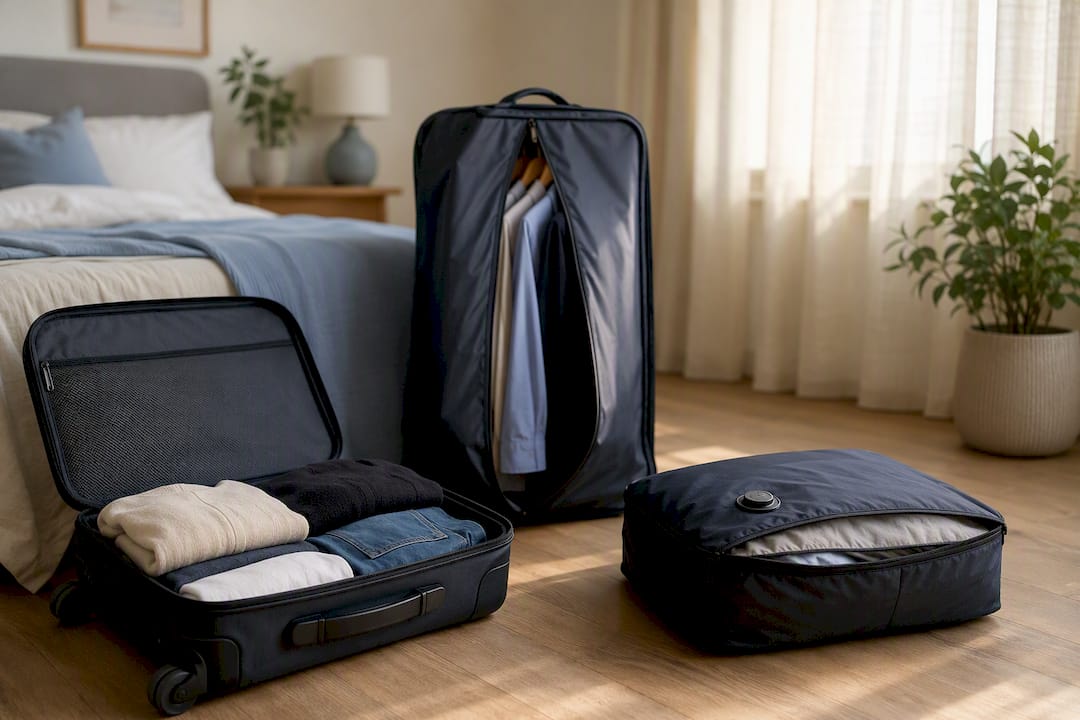
Every carrying method trades off protection, portability, and space, and your choice should match how often you’re hauling a suit through an airport.
A garment bag gives the best shoulder protection since the jacket hangs flat with almost no folding, but it’s another item to juggle through security and overhead bins. A standard carry-on with the inside-out fold is the most portable option and works fine for one or two suits a trip. Compression systems win on space but were never designed to protect a jacket’s internal structure.
For occasional travelers, a wheeled carry-on with the fold method covers most needs. For anyone packing a suit multiple times a month, investing in a dedicated garment folder is worth it because it creates wider, gentler folds than an improvised fold in a duffel.
Look for these features whichever route you pick:
- A flat, dedicated packing area separate from other gear
- An external passthrough or sleeve so you’re not digging through the whole bag
- Room left for a soft topper above the suit
- Gentle, adjustable compression rather than one-size-crush straps
Pro Tip: If you’re choosing between fabrics for a travel suit, a durable straight-fit trouser in a resilient blend holds its shape better across multiple wears than a delicate lightweight weave, especially on multi-day trips where you can’t press it between wears.
Does Vacuum Compression Work for Suit Packing?
Vacuum compression is genuinely useful for a carry-on suit trip, just not for the suit itself. Compressing other garments frees up dramatic space, which is where the technology earns its keep.
Compression and vacuum packing can meaningfully expand your usable carry-on volume and cut down on baggage fees, but structured jacket parts like shoulders and internal canvas shouldn’t go through a vacuum bag directly. Repeated hard compression on that canvas can flatten the shape over time, the same problem that comes from rolling a structured jacket too tightly.
The practical move: compress everything else. Casual layers, extra shirts, workout clothes, and toiletries all shrink dramatically in a vacuum bag, freeing up the flat space your suit needs on top.
- Compress shirts, casual pants, and soft layers, not the suit
- Keep the folded jacket in a garment sleeve or flat top layer
- Use the freed-up space for shoes, chargers, or a second outfit
Stoiq’s compression bags, backed by more than 20,000 satisfied travelers, use a built-in rechargeable pump, so there’s no separate device to pack or hunt for at your destination.
What’s the Fastest Way to Remove Wrinkles on Arrival?
Unpacking correctly matters as much as packing correctly. A rushed unpack undoes half the work you put into the fold.
- Unpack the suit the moment you get to your room and hang it on a sturdy, wide hanger. Gravity alone pulls out a surprising amount of the travel creasing within an hour or two.
- Run a hot shower with the bathroom door closed and the suit hanging nearby, not directly in the water stream. The steam relaxes wool fibers without soaking the fabric.
- For stubborn spots, use a hotel iron on a low setting with a damp press cloth between the iron and the fabric, or ask the front desk about pressing services if your event is same-day.
- Hand-smooth any remaining lines along the lapel and trouser crease while the fabric is still warm from the steam.
Your Quick Checklist for Carry-On Suit Packing
Print this list or screenshot it before your next trip.
Before you pack: press and cool the suit, empty every pocket, pack it last so it sits on top, and add buffer layers between folds.
Inside the bag: suit near the top, shoes bagged separately, compression straps loose across the shoulder area.
On arrival: hang immediately, steam-shower, hand-smooth, and request pressing if the event is urgent.
If wrinkles still show after steaming, check whether the jacket was folded shoulder-to-shoulder correctly. Most stubborn creases trace back to a rushed fold, not a lack of steam.
| Point | Details |
|---|---|
| Best fold method | Use the inside-out shoulder fold to protect padding and reduce visible fold lines. |
| Packing position | Place the suit near the top of the bag under a soft topper, never under heavy items. |
| Strap tension | Keep compression straps loose over the suit section; tight straps flatten shoulders. |
| Arrival fix | Hang immediately and use a hot shower’s steam before reaching for an iron. |
| Compression use | Compress everything except the suit itself; keep jacket shoulders out of vacuum bags. |
A frequent flyer’s honest take on suit packing
Anyone who has pulled a suit out of a duffel bag five minutes before a client meeting has learned this the hard way: the fold matters more than the bag. A cheap carry-on with a proper inside-out fold beats an expensive garment bag packed carelessly. The steam-shower trick has saved more meetings than any iron ever has.
— Hugh
Where Stoiq Fits Into Your Suit-Packing Routine
Stoiq isn’t trying to replace your fold, it’s trying to make room for everything else you’re bringing alongside that suit. The Stoiq Carry-On Solution uses a built-in rechargeable pump to compress shirts, casual layers, and toiletries down to a fraction of their size, so your folded jacket has clear, flat space at the top of the bag instead of getting squeezed between overstuffed packing cubes.
The routine that works best: fold your suit using the inside-out shoulder method, set it aside, then compress your remaining clothes with Stoiq to free up room. Never run the jacket itself through the vacuum bag; the shoulders and canvas need open space, not compression. More than 20,000 travelers have used Stoiq to fit two or three times more into a single carry-on, which is often the difference between checking a bag and walking straight to your gate. Check the Stoiq Carry-On Solution 20L to see which size fits your next trip.
Sources
- How to Pack a Suit for Travel | Bespoke CB
- This is how to pack a suit in a carry-on - The Manual
- How to Pack a Suit in a Carry-On Without Wrinkles
- How to Travel With a Suit: A Wrinkle-Free Guide for Frequent Flyers - Carryology
