



Backpack vs Suitcase: Which One Actually Fits Your Trip
If your trip involves multiple stops, uneven ground, or public transit, a backpack wins. If you’re going airport to hotel to airport, staying in one place, or need your clothes to arrive wrinkle-free, a suitcase wins. That’s the whole verdict in one sentence, but the nuance matters just as much as the answer.
Trip length, terrain, and your own back and knees all shift the math. A ten-day trip through three European cities favors a backpack. A five-night resort stay favors a suitcase every time. Before you buy either, check your specific airline’s carry-on and personal-item dimensions, since TSA doesn’t set those size rules itself.
- Backpack: best for multi-city rail trips, hostels, cobblestone streets, and frequent transfers.
- Suitcase: best for business travel, cruises, resort stays, and single-destination trips.
- Either works fine if your itinerary is genuinely mixed. Details below.
Key Takeaways
The right luggage choice comes down to matching your bag to your itinerary’s hardest transfer, not its easiest one.
| Point | Details |
|---|---|
| Apply the worst-leg test | Choose the bag that survives your hardest transfer, whether that’s stairs, cobblestones, or a long walk. |
| Backpacks win multi-stop trips | Frequent transfers, uneven terrain, and hostel stays favor mobility over rolling efficiency. |
| Suitcases win single-destination trips | Business travel, cruises, and resort stays reward lower physical strain and better organization. |
| Verify airline rules before buying | TSA doesn’t set carry-on size limits; your specific airline does, so check dimensions first. |
| Compression tools change the equation | Stoiq’s vacuum compression bags and compression backpack can make a carry-on backpack viable for longer trips. |
Table of Contents
- Backpack vs Suitcase for Travel: The Case for Going Hands-Free
- Suitcase vs Backpack: Where Rolling Luggage Still Wins
- How Do You Decide Between a Backpack or Suitcase?
- Packing and Airline Rules That Can Change Your Decision
- Combining Systems: When One Bag Isn’t Enough
- A Traveler’s Honest Take on Choosing the Right Bag
- Stoiq’s Compression Tools Can Change Which Bag Works
- Frequently Asked Questions
- Sources
Backpack vs Suitcase for Travel: The Case for Going Hands-Free
A backpack shines the moment your itinerary stops being predictable. Stairs at a train station, cobblestones outside a rental in Lisbon, a packed subway platform in Tokyo. A suitcase drags, tips, and jams in doorways in these situations. A backpack just rides on your body and moves with you.
Mobility is the headline benefit. You climb stairs two at a time, weave through crowded platforms, and never have to lift 30 pounds over a curb. Hands-free carrying means you can hold a coffee, a phone, or a toddler’s hand while walking, though it comes with a tradeoff: a backpack on your back is harder to keep an eye on than a suitcase rolling in front of you, so pickpocket-prone areas call for a bit more awareness.
Fit determines whether any of this feels good. A properly adjusted hip belt shifts a large share of the pack’s weight off your shoulders and onto your hips, which is why Rick Steves recommends backpacks for uneven terrain and frequent transfers in the first place. Get the fit wrong and that benefit reverses, loading your shoulders instead and leaving you sore by day two.
Organization used to be a backpack’s weak spot, but clamshell-style packs that unzip flat like a suitcase have closed most of that gap, especially paired with packing cubes or compression bags.
- Multi-city rail trips: pack once, hop trains, skip the wheeled-suitcase struggle on platforms.
- Hostels and budget stays: no elevators, no smooth floors, sometimes no floors at all.
- Adventure or outdoor travel: unpredictable ground beats any suitcase’s wheels.
Pro Tip: Load your pack the way you actually intend to pack it, then wear it around your house or block for 10 to 15 minutes before you buy. If your shoulders ache in that short window, it will ache far worse on a real travel day.
Suitcase vs Backpack: Where Rolling Luggage Still Wins
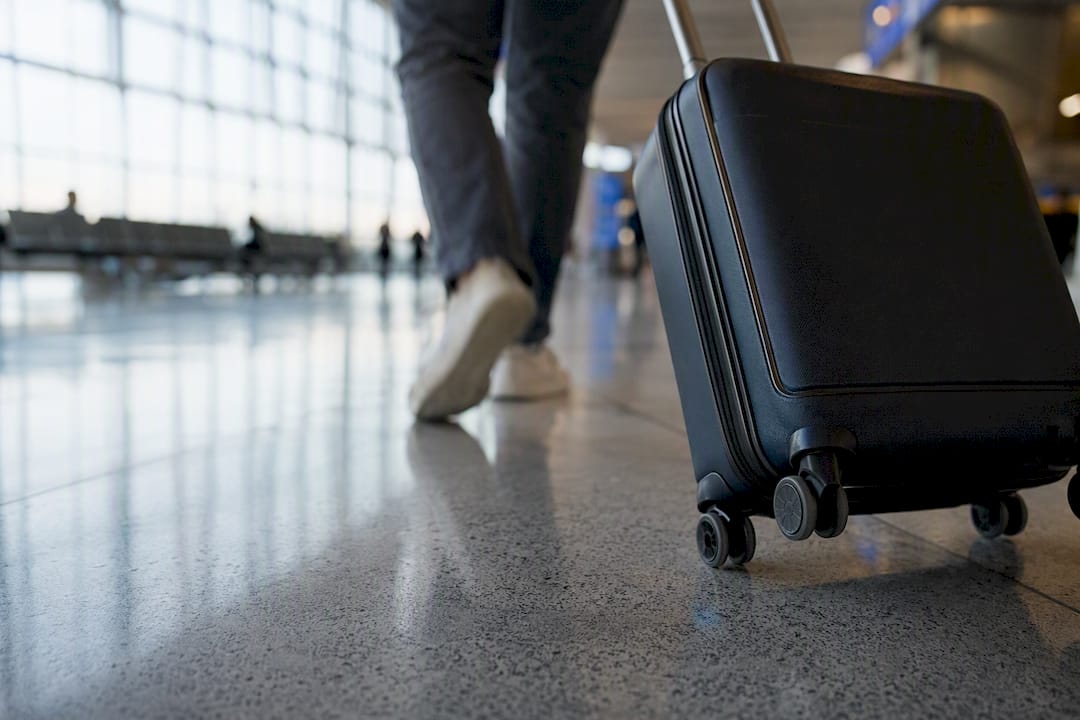
Nothing beats a suitcase on a smooth airport floor. You’re not carrying weight at all, just guiding it, which matters enormously on long layovers or when you’re managing kids, work bags, or both.
Lower physical strain is the biggest advantage. Your back and shoulders do almost none of the work, which matters for travelers with joint issues, chronic pain, or anyone who simply doesn’t want to arrive at a business meeting sweaty and sore. Protection and organization follow close behind. Hard-shell suitcases guard fragile items like bottles or electronics better than a soft pack ever will, and flat-fold packing keeps dress shirts and suits far less wrinkled than compression-rolled clothes in a backpack.
Wheels are where suitcases differ most from each other. Spinner wheels glide effortlessly across polished terminal floors but can crack or seize on cobblestones and gravel. Larger, skate-style wheels handle rough ground with more durability, though they add weight and eat into interior space, a tradeoff Rick Steves points out when comparing wheel styles for uneven terrain.
- Business travel: rolling into a hotel lobby beats arriving sweaty from a shoulder pack.
- Cruises and resort stays: one destination, no transfers, maximum packing efficiency.
- Long single-location trips: more clothes, less compromise on organization.
Suitcases lose their edge fast the moment stairs, gravel, or multiple transfers enter the picture. That’s the tradeoff to weigh honestly before you buy.
How Do You Decide Between a Backpack or Suitcase?
Stop weighing pros and cons in the abstract and run your actual itinerary through a short filter instead.
- Count your transfers. Zero to one means suitcase-friendly; three or more means backpack territory.
- Check the ground. Cobblestones, gravel, dirt paths, or unpaved lots push you toward a backpack.
- Think about clothing needs. Formal wear or fragile items favor a suitcase’s flat-pack protection.
- Be honest about your body. Bad knees, a bad back, or limited upper-body strength rule out a heavy pack regardless of itinerary.
- Confirm your airline’s carry-on rules before you commit to a bag size.
The tie-breaker, when nothing else settles it, is what Carryology calls the worst-leg test: pick the bag that survives your hardest transfer, not your easiest one. A traveler flying nonstop into a resort with a shuttle waiting doesn’t need to think about stairs. A traveler switching trains three times in Prague absolutely does.
Run this checklist in under a minute:
- Are you making more than two transfers between transport modes?
- Will you face stairs, gravel, or cobblestones at any point?
- Do you need to protect suits, dresses, or breakable items?
- Do you have any physical limitation that rules out carrying weight?
- Have you confirmed your airline’s exact carry-on dimensions?
If your answers split evenly between backpack-favoring and suitcase-favoring conditions, that’s a red flag pointing toward a hybrid setup instead of forcing one bag to do a job it’s poorly suited for.
Packing and Airline Rules That Can Change Your Decision
Airlines, not the TSA, set the size and weight limits that determine whether your bag counts as a carry-on. TSA doesn’t restrict bag type at all; it simply screens whatever you bring, provided your carry-on and personal item fit your airline’s allowances, typically around 22 by 14 by 9 inches for a standard carry-on. Domestic US carriers tend to enforce dimensions more strictly than weight, while some international carriers cap weight too, so check your specific route before you pack.
A backpack carry-on can actually reduce stress at the gate. Business Insider notes that boarding late with a rolling suitcase risks running out of overhead space, while a backpack slides under the seat without a fight.
Packing technique matters as much as bag choice. Packing cubes organize; compression bags reclaim volume that would otherwise sit empty. Carryology has found that compression tools and clamshell packs meaningfully shrink the organizational gap between backpacks and suitcases, sometimes enough to change which bag is even feasible for a given trip.
Statistic Callout: Common domestic carry-on limits sit around 22x14x9 inches, but that figure varies by carrier, so verify it against your specific airline rather than assuming a universal standard.
- Roll or fold clothes tightly, then compress; wrinkle-prone fabrics do better folded flat in a suitcase.
- Use packing cubes to separate categories and keep a backpack’s single compartment from turning into a jumble.
- Protect electronics and fragile items in the center of the bag, away from the exterior.
Pro Tip: Before your trip, load your bag exactly as you plan to travel, then check it against your airline’s sizer at the airport or a home replica made from a cardboard box. It catches sizing surprises before you’re standing at the gate.
Combining Systems: When One Bag Isn’t Enough
Plenty of experienced travelers skip the either-or debate entirely. A rolling suitcase for the bulk of your gear, paired with a small daypack for a camera, laptop, or snacks, covers both smooth-floor efficiency and hands-free access at the same time.
Wheeled backpacks try to split the difference directly, rolling on pavement and converting to shoulder straps for rough terrain. The compromise is real: they’re heavier than either pure design and the wheel housing eats into interior volume.
- Roller plus daypack: ideal for city trips with one long transfer and several short ones.
- Wheeled hybrids: useful for travelers who can’t predict their terrain in advance.
- Packing cubes and compression bags: the accessories that generate the biggest space gains regardless of which bag you choose.
A Traveler’s Honest Take on Choosing the Right Bag
My rule of thumb: backpack for anything with more than two transfers, suitcase for anything door to door. I once watched a friend haul a 26 inch hardshell up three flights of stairs at a Prague guesthouse with no elevator. That was the worst leg of her trip, and it should have decided her bag before she ever left home. Test your gear loaded, not empty, before you buy.
Stoiq’s Compression Tools Can Change Which Bag Works
Here’s where compression tools shift the entire calculation: a vacuum compression bag can shrink your clothing volume enough to fit a week’s worth of travel into space that used to demand a checked bag, which means more trips stay carry-on only and skip checked-bag fees entirely. That same compression logic is why Stoiq built a compression backpack with an integrated vacuum system, turning a bag you’d normally reserve for short trips into one that handles ten days of multi-city travel without sacrificing capacity.
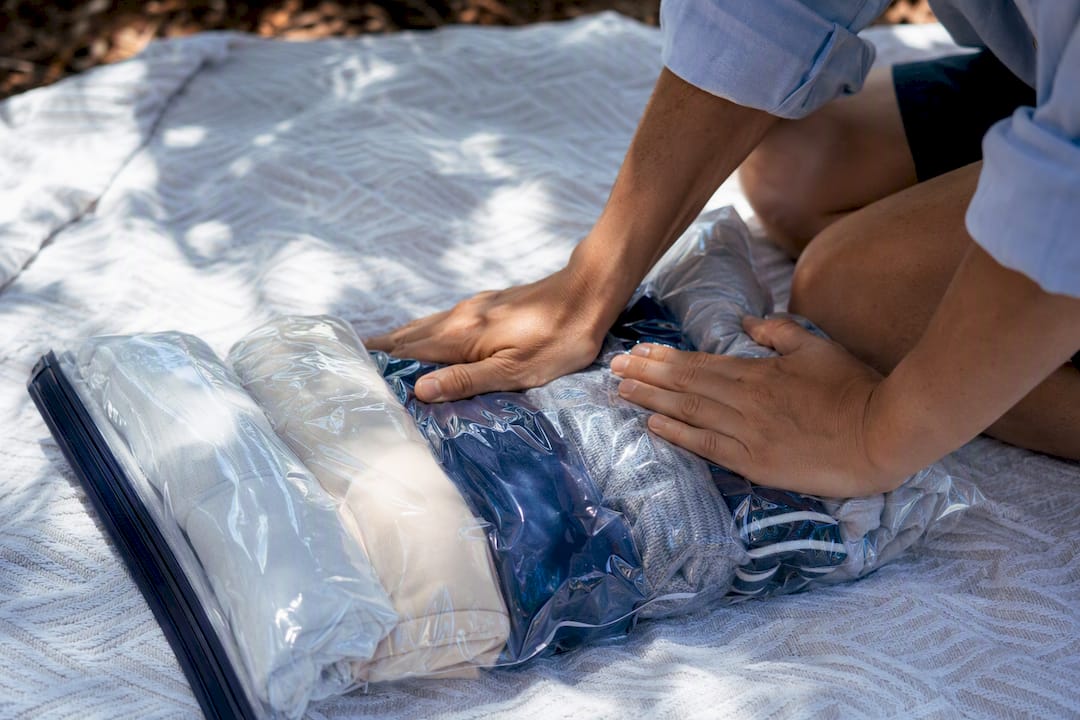
If you’re planning a longer trip and leaning backpack for the mobility, pairing it with compression gear is what makes that choice practical rather than cramped. The Carry-On Bundle combines a compression backpack with a 25L vacuum bag for exactly this scenario. Check out Stoiq’s carry-on compression bag to see whether your next itinerary can stay backpack-friendly after all.
Frequently Asked Questions
Is a backpack or suitcase better for a two-week Europe trip with multiple cities? A backpack usually wins here because of frequent transfers, train platforms, and cobblestone streets in older city centers. If you’re staying mostly in one or two cities with short transfers between them, a suitcase can still work fine.
Which is better, backpack or suitcase, for business travel? A suitcase almost always wins for business trips. You need wrinkle-free clothing, easy access to a laptop bag, and minimal physical strain before a meeting, all of which favor rolling luggage over a shoulder-carried pack.
Can a travel backpack meet airline carry-on size limits? Yes, as long as it fits your specific airline’s dimensions, since TSA itself doesn’t restrict bag type or size. Measure your packed backpack against your airline’s published limits before you fly.
Does a compression bag really let you pack more in a carry-on? Yes. Compression tools reduce the volume clothing takes up, which is why travel experts note they can shrink the organizational and capacity gap between backpacks and suitcases enough to change which bag is realistic for longer trips.
What’s the best luggage option if my trip mixes city walking and one long flight? A hybrid setup, like a rolling suitcase paired with a small daypack, or a wheeled backpack, usually handles mixed itineraries better than committing fully to one bag type.
Sources
- Backpack or rolling bag? (Rick Steves)
- When to travel with a backpack vs. a carry-on luggage (Business Insider)
- Backpack vs rolling luggage (Carryology)
